
Sudoku Puzzle Challenge That Sharpens Logic Every Single Day
Introduction to Sudoku
Sudoku is one of the most popular puzzle games in the world. Millions of people enjoy Sudoku every day because it combines entertainment, concentration, and logical thinking. Unlike many number-based games, Sudoku does not require advanced mathematics. Success comes from observation, reasoning, and patience rather than calculation.
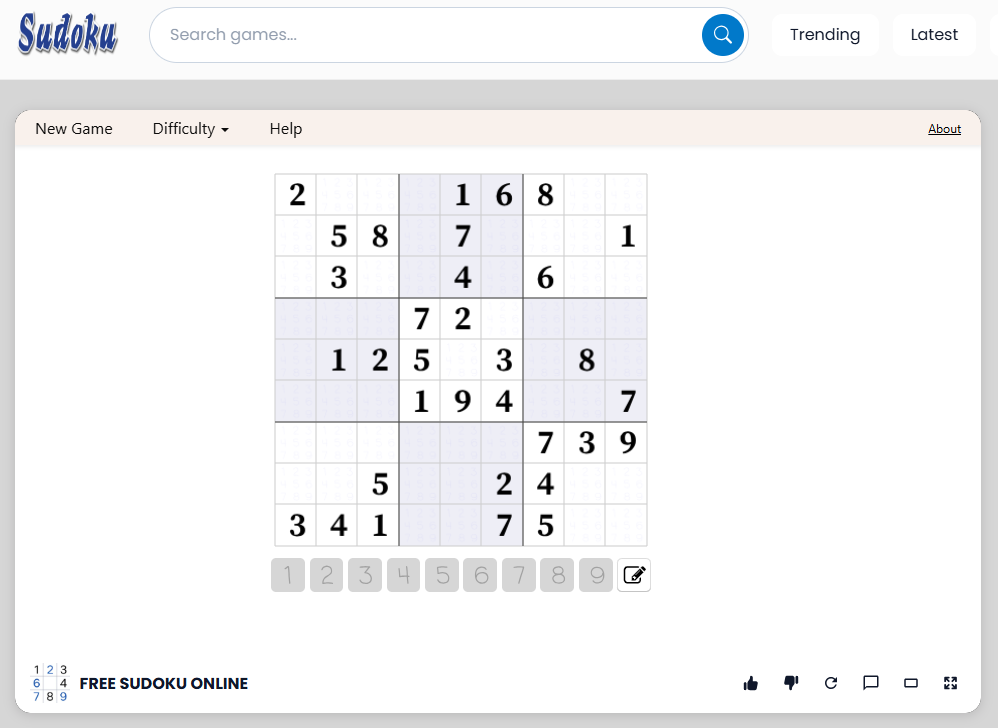
A standard Sudoku puzzle consists of a 9x9 grid divided into nine smaller 3x3 sections. Some cells already contain numbers, while others remain empty. The objective is simple: fill every empty cell with a number from 1 to 9. Each row, each column, and each 3x3 section must contain every number exactly once.
The straightforward rules make Sudoku accessible for beginners, while advanced puzzles provide a significant challenge for experienced players. This balance has helped Sudoku remain a favorite puzzle across different age groups and cultures.
The History Behind Sudoku
Early Concepts and Development
The foundation of Sudoku can be traced to mathematical puzzles developed many decades ago. Puzzle creators explored number placement challenges that required logic instead of arithmetic. These concepts gradually evolved into the format recognized today.
A major step occurred during the late twentieth century when puzzle publishers introduced a structured number-placement game to a wider audience. The puzzle gained attention because of its elegant design and easy-to-understand rules.
Global Popularity and Expansion
Sudoku experienced rapid growth after appearing in newspapers and magazines around the world. Readers quickly became interested in solving daily puzzles, and publishers responded by offering different difficulty levels.
The rise of digital technology accelerated this popularity. Sudoku apps, websites, and online competitions made puzzles available at any time. Today, Sudoku remains a leading puzzle genre in both print and digital formats.
Understanding the Basic Rules
One Number Per Row
Every row must contain the numbers 1 through 9 without repetition. If a number already appears in a row, that same number cannot be placed elsewhere within that row.
One Number Per Column
The same principle applies to columns. Every column must include each number from 1 to 9 exactly once. Duplicate values are not allowed.
One Number Per 3x3 Section
Each 3x3 section must also contain every number from 1 to 9. This additional requirement creates the logical complexity that makes Sudoku engaging.
By following these three rules simultaneously, players gradually determine the correct position for every number in the puzzle.
Benefits of Playing Sudoku
Improved Logical Thinking
Sudoku encourages analytical thinking. Players examine available information, identify patterns, and eliminate impossible options. Regular practice strengthens logical reasoning skills that can be useful in everyday decision-making.
Better Concentration
Completing a Sudoku puzzle requires sustained attention. Players must carefully analyze rows, columns, and sections without losing focus. This process helps improve concentration and mental discipline.
Enhanced Problem-Solving Skills
Every Sudoku puzzle presents a unique challenge. Players learn to approach problems methodically and evaluate multiple possibilities before reaching a solution. These habits can contribute to stronger problem-solving abilities.
Mental Relaxation
Many people find Sudoku relaxing despite its intellectual challenge. Focusing on a structured puzzle can provide a break from daily stress and create a sense of accomplishment after completion.
Effective Strategies for Solving Sudoku
Start With Obvious Numbers
Beginners should first identify rows, columns, or sections that already contain many numbers. Empty cells in these areas often have fewer possible solutions, making them easier to solve.
Use the Elimination Method
The elimination method involves removing impossible options. If a number already exists in a row, column, or section, it cannot be placed in the target cell. Gradually narrowing possibilities helps reveal the correct answer.
Scan Rows and Columns
Scanning involves examining rows and columns to determine where a specific number can fit. This technique often reveals placements that might not be immediately obvious.
Focus on One Number at a Time
Some players find success by concentrating on a single number, such as 1 or 5, across the entire grid. Tracking one number can simplify the solving process and uncover hidden opportunities.
Different Levels of Sudoku Difficulty
Easy Sudoku
Easy puzzles contain many pre-filled numbers and require only basic logic. These puzzles are ideal for beginners who want to learn the rules and build confidence.
Medium Sudoku
Medium puzzles offer fewer starting clues and require more advanced reasoning. Players often need to combine multiple techniques to progress efficiently.
Hard Sudoku
Hard puzzles challenge even experienced players. These grids contain fewer clues and demand careful analysis, patience, and strategic thinking.
Expert Sudoku
Expert-level Sudoku represents the highest difficulty for many puzzle enthusiasts. Solving these puzzles often requires sophisticated techniques and extensive logical deduction.
Sudoku in the Digital Age
The digital revolution has transformed how people enjoy Sudoku. Mobile applications provide unlimited puzzles, adjustable difficulty levels, and helpful features such as hints and progress tracking.
Online platforms allow players to compete with others, compare solving times, and participate in global leaderboards. These features add a competitive element while maintaining the traditional appeal of Sudoku.
Many educational institutions also recognize the value of Sudoku as a tool for developing logical reasoning. Students often use Sudoku puzzles to strengthen critical thinking skills in an enjoyable format.
Common Mistakes to Avoid
Guessing Too Early
One frequent mistake involves placing numbers without sufficient evidence. Guessing can create errors that become difficult to identify later. Logical deduction remains the most reliable approach.
Ignoring Small Details
A single overlooked number can prevent progress. Careful observation is essential for accurate puzzle solving.
Rushing Through the Puzzle
Sudoku rewards patience and precision. Moving too quickly increases the likelihood of mistakes and can complicate the solving process.
Why Sudoku Remains Popular
Sudoku continues to attract players because it offers a unique combination of simplicity and depth. The rules are easy to learn, yet the challenge remains engaging even after years of practice.
Every puzzle provides a fresh experience. No two completed grids feel exactly the same, and players constantly encounter new patterns and logical situations. This variety keeps Sudoku interesting and encourages long-term participation.
Another reason for enduring popularity is accessibility. Sudoku can be played in newspapers, books, websites, mobile apps, and many other formats. Players need only a puzzle and a willingness to think logically.
Conclusion
Sudoku is far more than a simple number puzzle. It is an engaging mental exercise that promotes logical thinking, concentration, and problem-solving skills. With straightforward rules and endless variations, Sudoku appeals to beginners and experienced puzzle enthusiasts alike.
Whether played on paper or through a digital platform, Sudoku provides a rewarding challenge that stimulates the mind while delivering entertainment. Regular practice can improve cognitive abilities, strengthen focus, and create a satisfying sense of achievement. For anyone seeking a fun and meaningful puzzle experience, Sudoku remains an excellent choice.